
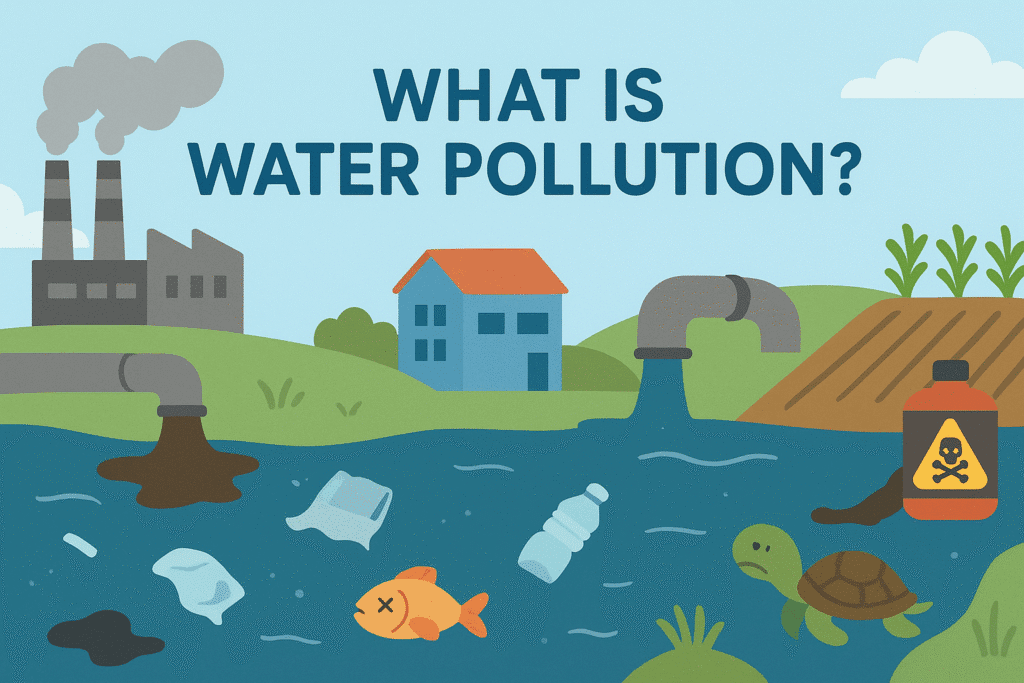
Water is one of the most essential resources for life. But today, it is becoming increasingly contaminated due to human activities. What is water pollution? Simply put, water pollution is the presence of harmful substances in water that make it unsafe for drinking, cooking, farming, or supporting aquatic life.Water pollution affects oceans, rivers, lakes, ponds, and even groundwater. It harms humans, animals, and the environment. Understanding what causes water pollution and how we can prevent it is crucial for protecting our future.
What Is Water Pollution?Solutions to Reduce Water Pollution
1. Proper Waste Management
Industries and households must dispose of waste in a responsible manner.
2. Reduce Plastic Use
Switching to reusable bottles, cloth bags, and biodegradable materials helps protect water bodies.
3. Water Treatment Plants
Sewage and industrial wastewater should be treated before being released into rivers.
4. Eco-Friendly Farming
Natural fertilizers, organic farming, and controlled pesticide use reduce chemical pollution.
5. Awareness and Education
Educating communities about water conservation and pollution prevention encourages responsible behavior.
6. Government Regulations
Strict laws and monitoring systems can prevent companies from polluting water bodies.
Water pollution occurs when pollutants such as chemicals, plastic, sewage, and industrial waste enter water bodies, making the water toxic and unsafe. These pollutants disrupt ecosystems, destroy habitats, and threaten the health of humans and wildlife.
Water pollution can come from visible waste like plastic or invisible contaminants like pesticides and chemicals.
Major Causes of Water Pollution
1. Industrial Waste
Factories discharge harmful chemicals, metals, and toxins into rivers and lakes without proper treatment.
2. Domestic Sewage
Wastewater from homes—including detergents, soaps, and toilet waste—often flows directly into water bodies.
3. Agricultural Runoff
Fertilizers and pesticides used in farming get washed into rivers during rainfall, contaminating freshwater sources.
4. Plastic Pollution
Plastic bottles, bags, and microplastics are a major threat to marine life.
5. Oil Spills
Accidental oil spills in oceans destroy marine ecosystems and harm species like fish, turtles, and seabirds.
6. Thermal Pollution
Hot water released from power plants increases water temperature, reducing oxygen levels.
Effects of Water Pollution
1. Impact on Human Health
Contaminated water can cause diseases such as:
- Cholera
- Diarrhea
- Typhoid
- Skin infections
Millions of people suffer every year due to lack of clean drinking water.
2. Harm to Aquatic Life
Toxic pollutants kill fish, plants, and other marine organisms. It also affects the entire food chain.
3. Environmental Damage
Polluted water leads to algae growth (algal blooms) that reduces oxygen levels, causing massive fish deaths.
4. Economic Loss
Fisheries, tourism, and agriculture suffer when water bodies are contaminated.
Types of Water Pollution
1. Surface Water Pollution
This includes pollution of rivers, lakes, ponds, and oceans due to waste dumping, oil spills, and sewage discharge.
2. Groundwater Pollution
Pollutants seep through soil and enter underground water sources, making wells and hand pumps unsafe for drinking.
3. Microbial Pollution
Bacteria and viruses from sewage cause infections and waterborne diseases.
4. Chemical Pollution
Toxic chemicals from factories, pesticides, and cleaning agents contaminate water and affect human health.
Why We Should Not Cause Water Pollution
Water pollution is a growing environmental concern that affects the health of people, animals, and ecosystems. When harmful substances enter water bodies, the water becomes unsafe for daily use and destroys aquatic life. Clean water is essential for a healthy and sustainable future.
We should not cause water pollution because every small action impacts the environment. Simple habits—like reducing plastic use, disposing waste properly, and keeping lakes and rivers clean—can make a big difference. Protecting water today ensures clean water for future generations.
Conclusion
Understanding what is water pollution is the first step toward protecting our environment. Clean water is essential for life, and it is our responsibility to preserve it for future generations. By reducing waste, avoiding plastic, and using eco-friendly practices, we can help keep our water sources clean and healt
